
Compounds from native trees contribute distinctive properties to propolis, a natural substance produced by bees, according to a recent study by apicultural scientists and a Māori land trust in the native ngahere of Te Urewera.
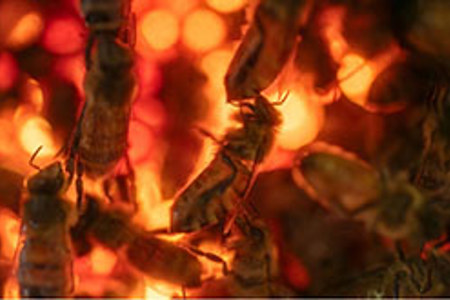
Propolis is a resinous substance honey bees create from plant materials including sap and leaf buds to protect their hives. For centuries humans have used propolis as a natural or herbal remedy, being widely recognised for its healing properties, especially in wound care, as an antimicrobial agent, and as a natural immune function booster.
Propolis from New Zealand has historically been classified as Poplar-type, with early studies linking its composition to the introduced, and now widespread, popular tree species. While its chemical profile has been assumed to be similar to European propolis, there’s been little research into native plant sources, until now.
Working in partnership with Manawa Honey, a business founded and run by Tuawhenua Trust, scientists at the Bioeconomy Science Institute Maiangi Taiao have been investigating whether compounds from native flora contribute unique properties to propolis, with the aim of supporting future efforts to characterise and potentially commercialise distinctive local propolis types.
As part of this work, honey bee hives were placed on Tuawhenua Trust lands near Ruatāhuna, at the heart of Te Urewera last Autumn. The team from Manawa Honey supported Bioeconomy Science Institute scientists with the collection of native plant samples within 1500 meters of the site and propolis collection from the hives.
Analysis revealed that both plant and propolis samples contained a wide range of compounds, with the majority of major compound peaks in propolis also present in many plant samples.
Project lead, Senior Scientist Dr Michelle Taylor says this research provides foundational data that links the chemistry of New Zealand native plants surrounding an apiary (a group of honey bee hives) with propolis from that same apiary.
“This study demonstrates that propolis from Te Urewera ngahere contains a complex blend of compounds derived from multiple native plant species. Further research is required to identify the role and/or potential of these specific characteristics, but this collaborative research is an exciting step toward deepening the connection to the whenua of this special region that may unlock potential benefits for food, health, and functional products,” says Dr Taylor.
Building on this research, a joint project in Ruatāhuna began this spring, involving Tuawhenua Trust and Waikato University. This work will identify distinct chemical components of ngahere propolis that are collected by the bees at different times throughout the season.
Manawa Honey NZ chief executive, Brenda Tahi, says the brand was established in 2013 by the Tuawhenua Trust, which manages 9,000 hectares of land around Ruatāhuna.
“Our bees forage deep within the untouched native forests of Te Urewera. This environment is rich in biodiversity and gives our honey and propolis provenance and purity. We hope this research will unlock further knowledge in this space, creating future opportunities for our people and supporting our efforts to care for this whenua.”