 Today we are at DK Logging’s stems crew in the Matahina Forest, near Kawerau, to test the capable and innovative new Tigercat LH857 running a Satco 3L2 and tethered off a T-Winch 10.3 when required.
Owner, Kevin O’Malley, says he is impressed with the new machine. “It drives better and has more lift power than the previous 855 – better cab, wider seat, and that swept up tail makes a big difference in the steep country.”
Kevin started out as a loader operator on a Hough 65, loading out for wood lot crews, and then decided driving the trucks looked like more fun. He took a job hauling logs out of Kawhia to Mount Maunganui and Pokeno.
“That forest is just about ready to harvest again, so it’s been a while,” he says.
Kevin had a break from trucks and logging for a few years, then got back into it by setting up a crew based in Taupō with Dave Olsen - hence D and K. Kevin and his wife Debbie have now bought the business, and Debbie says the D in DK now stands for Debbie, so it works out well.
The soil here is notoriously tough on gear, Kevin says. “It’s real gritty ash and clay. We get 30% more wear here versus the Tarawera side. You only get 3500-4000 hours out of a set of track chains, whereas we would get 6000 hours in other areas.”
The T-Winch and some additional 40mm cleats help with traction in this ground, which has some short, very steep sections in it.
The cab corner post is a sturdy looking addition and is well blended into the machine by Damon Collins Engineering (DCE) in Taupō. The 10.3 T-Winch has also had a high and wide treatment from DCE to give it more capability in the softer ground, and hence higher stumps, of this area.
Impressive seat and lift power
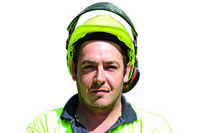
LH857 Operator, Arie Marshall, loves the new machine, especially the seat, and is also impressed by the extra lift power.
“I got into logging through my Grandfather,” Arie says.“I wormed my way in there, and started off on the chainsaw at age 15. I really wanted to run the skidder, but I had to start at the bottom and work my way up. So, yeah, in production thinning, manual felling and cutting to 6m lengths.
“It was a good place to start, manual felling, because you get to comprehend how and where best to fell the tree. Then I went from the skidder to the Bells, then into the diggers, loading out, and then when I came to work for Kev, I got into the harvesters. I have been on these for 20 years now, seven different harvesters over that time. The first one was in the Eucalyptus, near Kinloch in Taupō.”
Dealing with challenges
The terrain, while not overly high, has some very challenging sections with tight, steep gully heads keeping things interesting. The crew has had to deal with quite a few railways and powerline corridors lately, but is finally in a block...